
3. The Order of Stories
“The first story we hear
quietly edits the next one.”
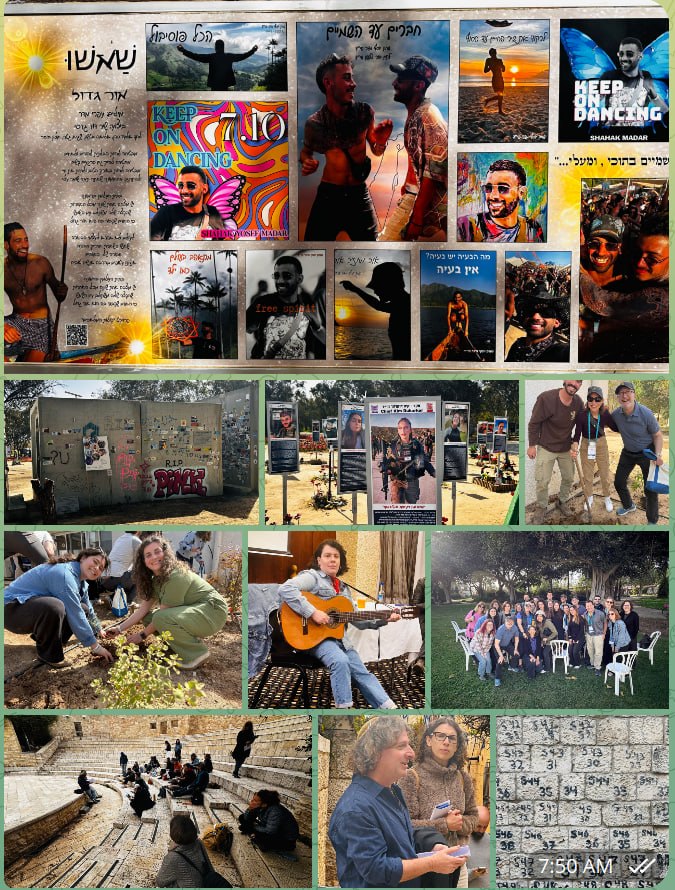
One of the most difficult parts of the trip was visiting the site of the Nova music festival. By now, everyone knows what happened there on October 7. But knowing something in theory and standing in the physical place where it happened are two very different experiences.
The site is quiet. Almost too quiet. Photos, small memorials, messages left by families and friends—each one representing a life interrupted. Walking through the area feels less like visiting a historical site and more like stepping into a very fragile memory.
Some of the people we met there told us their stories. Not all of them were written testimonies. Some stories simply can’t be captured on paper. They live in voices, pauses, unfinished sentences. And yet what surprised me most was not the grief, which was overwhelming, but the message that many of them repeated. Again and again, we heard something along these lines:
Israel still needs to build bridges.
Israel still needs to find ways for people to live together.
Hearing that in a place like Nova creates a strange emotional tension. It’s difficult to hold both ideas at the same time—the trauma of what happened and the insistence that coexistence still matters. And it made me wonder something that stayed with me for the rest of the trip.
During our program, we visited Haifa first. There, we listened to young Arab Israelis talk about the difficulties they experience living in a Jewish-majority country. Their concerns were thoughtful and honest. But we had already heard those perspectives before we visited Nova.
So I kept wondering: What would happen if the order were reversed?
What if the first thing we experienced was the Nova site—the stories of families, survivors, and unimaginable violence—and only after that we traveled to Haifa to listen to young Arab adults speak about feeling excluded? Would we hear them differently? Would we be more sympathetic to one side or the other? Would we ask different questions?
Programs like this are carefully designed. The order of experiences matters more than we usually realize. The stories we hear first shape the way we interpret the stories we hear later. And that’s one of the things I kept thinking about: how easily a narrative can form depending on which window you look through first.
Because Israel is a place where many windows exist at the same time.