
6. Loving Israel, Teaching Israel
“To teach a country
is to admit it is unfinished.”
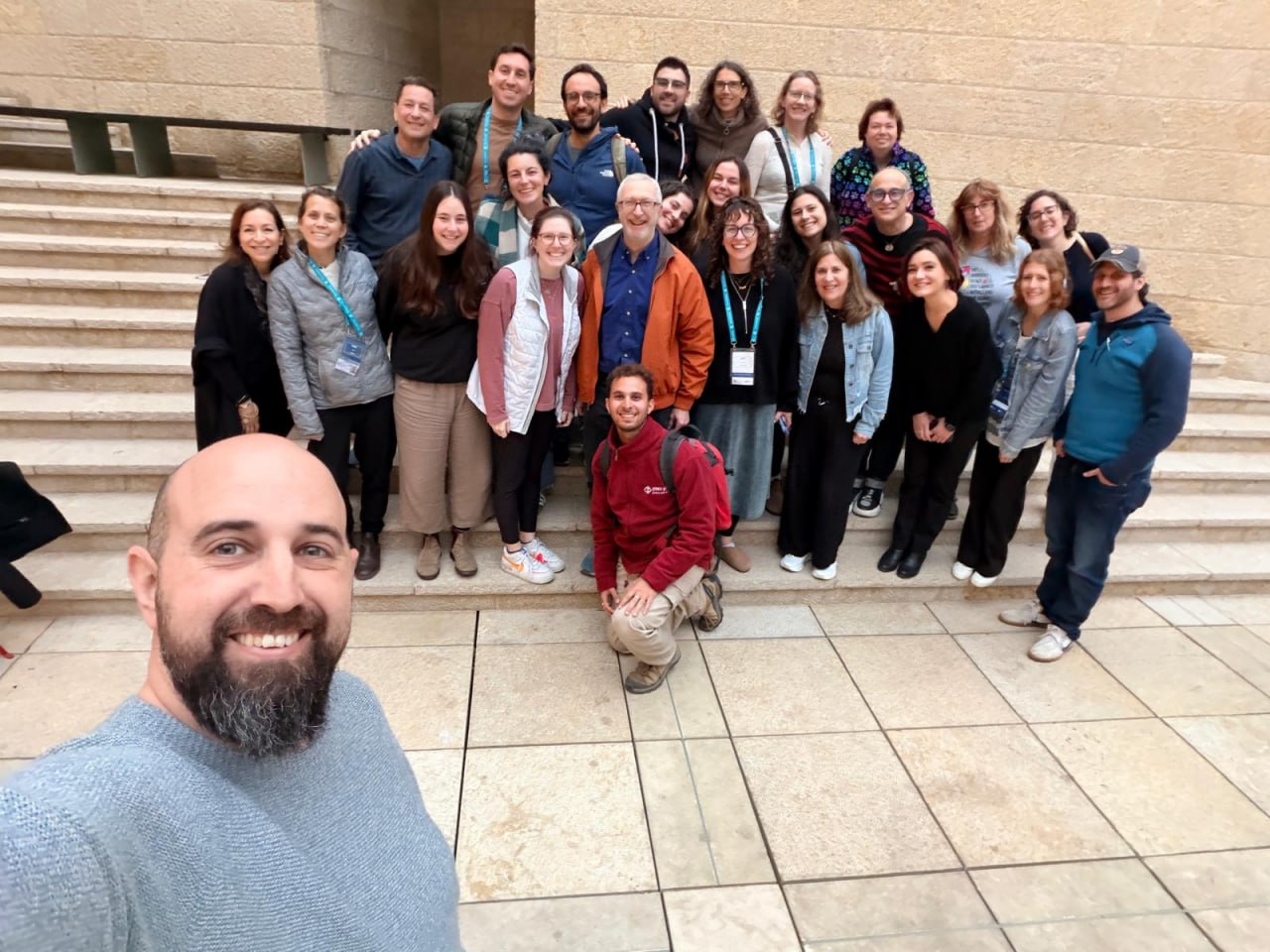
One important thing about our fellowship group is that most of us were not simply visitors. We were educators. Teachers, facilitators, administrators—people responsible in one way or another for shaping how Jewish communities, and especially younger generations, think about Israel.
That responsibility quietly accompanied every part of the trip. The question was not only what we personally thought about what we were seeing, but also what we would bring back to the communities we serve. In the United States today, the relationship between American Jews and Israel is complicated.
Many American Jews feel deeply connected to Israel culturally and historically, but that connection does not always translate into unconditional support for every decision made by the Israeli government. The current war with Iran, for example, raises difficult questions for many people in American Jewish communities. Some feel strongly supportive. Others feel conflicted. Some struggle to reconcile their values with the realities of a region where security concerns are constant.
For educators, that creates a real challenge. How do we teach about Israel honestly—without turning it into slogans? During the fellowship, many participants discussed helping students and community members understand Israel as a complex society rather than a simple symbol.
But for me, coming from a Russian-speaking Jewish background, the situation is somewhat different. Within the Russian-speaking Jewish community, the emotional relationship with Israel often feels much more straightforward. Part of this connection is very practical: almost everyone has family or close friends in Israel. Cousins. Former classmates. Parents. Children. Israel is not an abstract idea for us. It is a place where people we love live their everyday lives.
When Israelis face danger, it does not feel like distant news. It feels personal.
There is also another historical layer that shapes how many Russian-speaking Jews think about Israel. For generations in the Soviet Union, Jews lived with a constant awareness that they were outsiders. Antisemitism was rarely openly discussed, yet it persisted in universities, careers, and everyday life. Opportunities were limited in ways that everyone understood, even if few spoke about them directly.
Israel represented something fundamentally different.
For the first time in modern history, there was a place where Jews were not a minority depending on the tolerance of others, but a society responsible for its own future. Because of that history, many people in our community carry a strong belief that the existence of Israel helps protect Jewish life everywhere. Without Israel, they feel, the situation of Jews in the rest of the world could easily become far more hostile.
In recent years, as antisemitism has begun rising again in many places, that feeling has only grown stronger. For many Russian-speaking Jews, supporting Israel is not only about politics or foreign policy. It is about the sense that somewhere in the world, there must be a place where Jewish people can stand securely on their own ground.
That does not mean our community ignores Israel’s complexities. But the starting point is often different. The connection begins with loyalty. Because of that, the lessons I bring back to my community may look somewhat different from the lessons other fellowship participants bring to theirs.
For some communities, the educational challenge may be strengthening emotional connection to Israel. For my community, the connection already exists.
What we may need more of are tools—ways to explain Israel thoughtfully to others who may not share that same instinctive bond. Which brings us back to the role of education. If we want to teach about Israel responsibly, we need something more than general conversations. We need frameworks that help students explore the country from multiple angles simultaneously.
One way to approach this might be through three different lenses.
The Human Stories
Students first encounter Israel through people.
- Jewish Israelis.
- Arab Israelis.
- Immigrants.
- Religious and secular communities.
During our visit to Haifa, we listened to young Arab Israelis describe the tension of living inside a Jewish-majority society. Their stories were thoughtful and honest. Later in the trip, Israeli friends of mine described everyday cooperation between Jewish and Arab professionals working side by side in hospitals, schools, and offices.
Two realities.
Both true.
Students should be able to hear these different voices before they try to analyze the larger political questions.
The History and Security Context
A second lens is history.
Without understanding Jewish history—centuries of persecution, exile, and vulnerability—many aspects of Israeli society are difficult to understand. Security concerns that may seem excessive from the outside often look very different when viewed through historical memory.
Standing at the Nova memorial site made that painfully clear. History does not disappear simply because we wish it would.
A Society Still Working on Itself
A third lens focuses on the ongoing effort within Israeli society to improve itself.
- The school we visited in Haifa.
- The Muslim–Jewish cultural center.
- The youth soccer program brings children together across communities.
These are not abstract ideas. They are real attempts by real people to address complicated social questions. When students see these efforts, Israel ceases to be a static image. It becomes what it actually is: a society still negotiating its identity, its values, and its future.
Perhaps that is the most honest way to teach about it. Not as a finished story. But as an ongoing conversation.
For some communities, the educational task will be nurturing connections. For my Russian-speaking Jewish community, the task may be slightly different. The connection already exists. What we may need most are ways to help others understand why Israel matters—even when it is complicated.
And perhaps that is one of the most important lessons educators can bring back from a journey like this.
Not a script. But a framework.